
Apr 1st 2026
The Ultimate Guide to Motorcycle Eyewear
Clear Vision, Safe Ride: The Ultimate Guide to Motorcycle Eyewear
When you’re hitting the open road, your vision is your most important safety asset. Wind, dust, UV rays, and road debris are constantly fighting for your attention—and your safety. Choosing the right motorcycle eyewear isn't just about looking like a badass (though that’s a plus); it’s about choosing the right tool for the environment you ride in.
In this guide, we’ll break down the different types of lenses, frames, and technologies to help you find the perfect pair for your next journey.
1. Motorcycle Sunglasses vs. Goggles: Which is Right for You?
The first choice every rider faces is the style of the frame. Your choice usually depends on your helmet type and riding style.
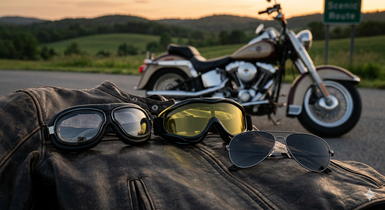
- Motorcycle Sunglasses: Sleek and versatile. Many of our motorcycle riding glasses feature foam padding around the rims. This "seal" protects your eyes from wind turbulence and dust while maintaining the lightweight feel of traditional shades.
- Motorcycle Goggles: If you wear an open-face helmet or ride at high speeds for long durations, motorcycle goggles are the gold standard. They provide a 360-degree seal, ensuring no wind gets in to dry out your eyes, and they stay securely strapped to your head regardless of the wind.
2. Decoding Lens Colors: More Than Just Style
Did you know that different lens tints are designed for specific weather and lighting conditions? Here is how to pick your shade:
- Smoke/Grey Lenses: The best all-rounder for bright, sunny days. They reduce brightness without distorting colors, making them perfect for long daytime hauls.
- Yellow/Amber Lenses: These are a "must-have" for overcast days, fog, or dusk. Yellow lenses enhance contrast and depth perception, making it easier to spot potholes or road hazards in "flat" light.
- Clear Lenses: Essential for night riding. They provide maximum light transmission while protecting your eyes from bugs and debris.
- Mirror Lenses: These look sharp, but they serve a purpose—they reflect more light away from the eye than standard tints, making them ideal for extremely bright, high-glare environments.
3. The Magic of Transition (Photochromic) Lenses
Tired of pulling over to swap your sunglasses for clear glasses when the sun goes down? Transition lenses (also known as photochromic lenses) are the solution.
These lenses contain molecules that react to UV light. In bright sunlight, they darken automatically. As the sun sets or you enter a tunnel, they fade back to clear. For the long-distance tourer, a pair of photochromic riding glasses is the ultimate "set it and forget it" gear.
Why Polarized Lenses Aren’t Recommended for Riders
While polarized lenses are great for fishing or driving a car, most experienced riders actually steer clear of them. Here’s why you might want to choose non-polarized lenses for the road:
- The "Oil Slick" Problem: Polarized lenses are designed to cut out glare. However, that "glare" is often how you spot dangerous oil patches, diesel spills, or wet spots on the pavement. Without that reflection, you might not see a slick spot until your tires are already on it.
- Digital Display Blackouts: Many modern motorcycle gauges and GPS units use LCD screens. Polarized filters can react with these screens, causing them to look completely black or "rainbowed" at certain angles, making it impossible to check your speed or directions.
- Helmet Shield Distortion: If you wear a full-face helmet, the combination of a polycarbonate face shield and polarized glasses can create "rainbowing" (optical interference patterns) that distorts your vision and causes eye strain.
Our Recommendation: Stick with high-quality smoke or grey tints for sun protection. They reduce brightness without hiding the road hazards you need to see.
4. Safety First: ANSI Z87.1 Ratings
When you're riding at 70mph, a pebble can turn into a bullet. Never settle for "gas station sunglasses." Quality motorcycle eyewear should be ANSI Z87.1 certified. This means the lenses are shatterproof and the frames are built to withstand high-velocity impacts. At Leather Bound, we prioritize gear that keeps you protected.
Final Thoughts
Whether you’re looking for the classic "chopper" look with padded shades or the full protection of high-speed goggles, the right eyewear makes every ride better.
Ready to upgrade your view? Shop our full collection of Motorcycle Eyewear here and find the perfect tint for your riding style.